
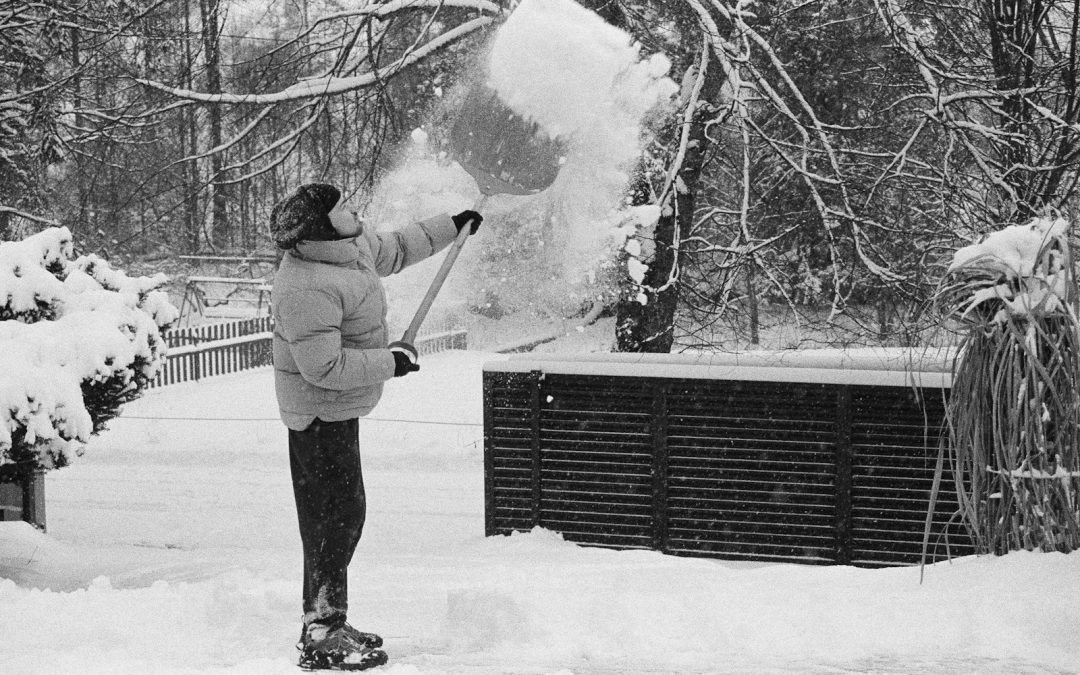
Snow season in Kingston is never far away, and for many of us that means early mornings with a shovel in hand. Shovelling snow safely is easier than most people think, and a few simple habits can save your back, shoulders, and neck a lot of strain this winter.
Why shovelling is harder on your body than it looks
Shovelling combines several things your body doesn’t often do all at once: repeated bending, lifting a heavy load, and twisting while you throw it. Cold air can make muscles feel tighter, and many of us go from sitting indoors to intense effort in seconds. Research on winter injuries consistently finds that the low back and shoulders are among the most commonly strained areas during snow removal.
That doesn’t mean you should avoid it. It means a little preparation goes a long way, especially for the first big snowfall of the season, when your body hasn’t yet adjusted to the work.
Warm up before you head outside
Treat shovelling like the moderate exercise it is. Spend three to five minutes moving before you start:
- March on the spot or walk briskly around the house to raise your heart rate gently.
- Do slow hip hinges, gentle torso rotations, and arm circles.
- Roll your shoulders and tuck your chin a few times to loosen your neck.
- Dress in layers and wear boots with good grip so you aren’t tensing against a slip.
Shovel smarter, not harder
Technique matters more than strength. These general tips are widely recommended by health organizations and rehabilitation professionals:
- Push the snow rather than lifting it whenever you can.
- Use a smaller scoop. Lighter loads are far kinder to your back than heavy, wet shovelfuls.
- Bend at the hips and knees, keep the load close to your body, and let your legs do the work.
- Turn your feet toward where you are throwing instead of twisting through your spine.
- Clear snow in layers if it is deep, and tackle it sooner rather than letting it pack down.
- Choose a shovel that suits your height. An ergonomic or bent-handled shovel can reduce the need to stoop.
Pacing is just as important. Work in short stretches, take breaks, sip some water, and switch sides regularly so one shoulder and one side of your back aren’t doing all of the work.
Know when to stop
Shovelling is strenuous, and it is okay to ask for help or hire someone if the snow is heavy and you aren’t feeling up to it. Stop right away if you notice chest discomfort, dizziness, unusual shortness of breath, or pain that spreads into an arm or jaw, and seek emergency care if those symptoms don’t settle. Sharp or worsening back pain, numbness, or tingling are also good reasons to stop and have it assessed by a health care professional.
How massage therapy can support a sore back
Even when you do everything right, a long driveway can leave you stiff and achy the next day. Muscle soreness after unaccustomed effort is common, and it usually settles within a few days. Massage therapy may help ease muscle tension, support comfortable movement, and promote relaxation while your body recovers. Research on massage suggests it can be a helpful part of managing short-term muscle and back discomfort, although results vary from person to person.
A registered massage therapist can also look at the bigger picture: how you move, where you tend to hold tension, and what might make winter tasks harder on your body. If your back or neck pain tends to linger or return, our massage therapy for chronic back and neck pain page explains how we approach it. If you stay active outdoors with winter sports as well, you may also be interested in sports injury massage therapy in Kingston.
A few habits to carry through the season
Beyond the shovel itself, small daily habits help your body handle winter better. Keep moving through the week with walking or gentle strength work, stay hydrated, and build in short stretch breaks if you spend long hours at a desk. Your body will thank you when the first big storm arrives. You can learn more about the practitioners behind our care on our team page.
Ready for some support?
This article is for general education and is not a substitute for personal medical advice. If winter chores have left you sore, or you would like a plan for staying comfortable all season, we would be glad to help. Contact the Kurated team to book a massage therapy appointment and get ahead of the snow.