
September has a way of waking up muscles that spent the summer on cruise control. Kids head back to soccer and hockey tryouts, weekend runners sign up for fall race training, and gym routines that slipped in August suddenly ramp back up. All of that new load on the body means one thing shows up in massage clinics every year at this time: sore, tight, overworked muscles. Here’s what the evidence actually says about how registered massage therapy can support fall athletes, and how to tell when soreness is normal versus when it’s worth a closer look.
Why Fall Is Prime Time for Muscle Strain
A body that hasn’t been training consistently and then jumps into three practices a week is a body that’s likely to feel it. This pattern, sudden increases in training frequency or intensity, is one of the most common contributors to overuse strain in both youth and adult athletes. It’s not just competitive athletes either. Recreational runners restarting a fall training block, parents chasing kids at the park, and desk workers returning to weekend hockey leagues all put unfamiliar demands on muscles and connective tissue after a slower summer.
The result is usually delayed onset muscle soreness, known as DOMS, which tends to show up twelve to twenty-four hours after activity and can peak around the forty-eight hour mark. It’s a normal response to unaccustomed exercise, not a sign that something has gone wrong, but it’s uncomfortable enough that people look for ways to speed recovery.
What a Sports Massage Session Actually Involves
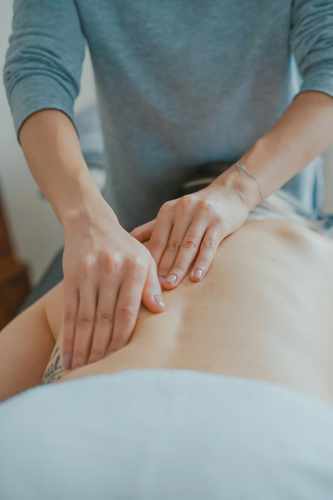
A sports-focused massage session typically starts with a conversation about your activity, training load, and any specific areas of tightness or concern. From there, a registered massage therapist uses techniques like deep tissue work, myofascial release, and targeted stretching to address the muscles under the most strain. Sessions are often adapted depending on timing: pre-event massage tends to be lighter and more stimulating, while post-event or recovery-focused massage uses slower, deeper strokes aimed at easing tension and improving circulation. For anyone dealing with a specific strain, our Sports Injury Massage Therapy treatments are tailored to the demands of the sport and the stage of recovery, rather than a one-size-fits-all approach.
What the Research Actually Shows
It’s worth being honest about what massage can and can’t do. A systematic review and meta-analysis published in Frontiers in Physiology found that massage was associated with meaningful reductions in perceived muscle soreness after strenuous exercise, with some research estimating soreness relief in the range of 30 percent compared to no treatment. Other studies have found that massage can lower blood markers of muscle damage and inflammation, and several trials report improvements in mood, perceived recovery, and reduced feelings of fatigue and anxiety after a session.
Where the evidence is more modest is performance. Reviews consistently find that massage does not meaningfully improve strength, sprint speed, jump height, or endurance on its own. Its real strength lies in the recovery experience: less soreness, better flexibility, and a nervous system that’s had a chance to shift out of “go” mode. For anyone training through a busy fall season, that combination, feeling less beat up and more able to show up for the next practice, is often exactly what’s needed.
Massage or Physiotherapy? Knowing the Difference
One question that comes up often this time of year is whether sore muscles call for massage or a physiotherapy assessment. As a general rule, generalized muscle tightness, soreness after a hard practice, or stress-related tension responds well to massage therapy. A specific injury, though, such as sharp pain in one spot, swelling, a joint that won’t move through its full range, or pain that doesn’t ease after a few days of rest, deserves a proper assessment before starting any hands-on treatment. A skilled massage therapist will screen for these red flags during an intake and refer out when something looks like it needs a diagnosis rather than a treatment plan. When in doubt, it’s always reasonable to mention the concern and let your therapist help you figure out the right next step.
Building Recovery Into a Fall Routine
The athletes and weekend warriors who tend to feel best through a busy fall season are usually the ones who treat recovery as part of training, not an afterthought. That can mean a massage every few weeks through a heavy training block, paying attention to sleep and hydration, and easing into higher training volumes rather than jumping in all at once. None of this replaces good coaching or a gradual return to activity, but it does give overworked tissue a better chance to keep up with the demands being placed on it.
If practices have picked back up and your muscles are letting you know about it, our registered massage therapists can help you build a recovery plan that fits your season. Book a session at kurated.ca and let’s get you moving comfortably again.