
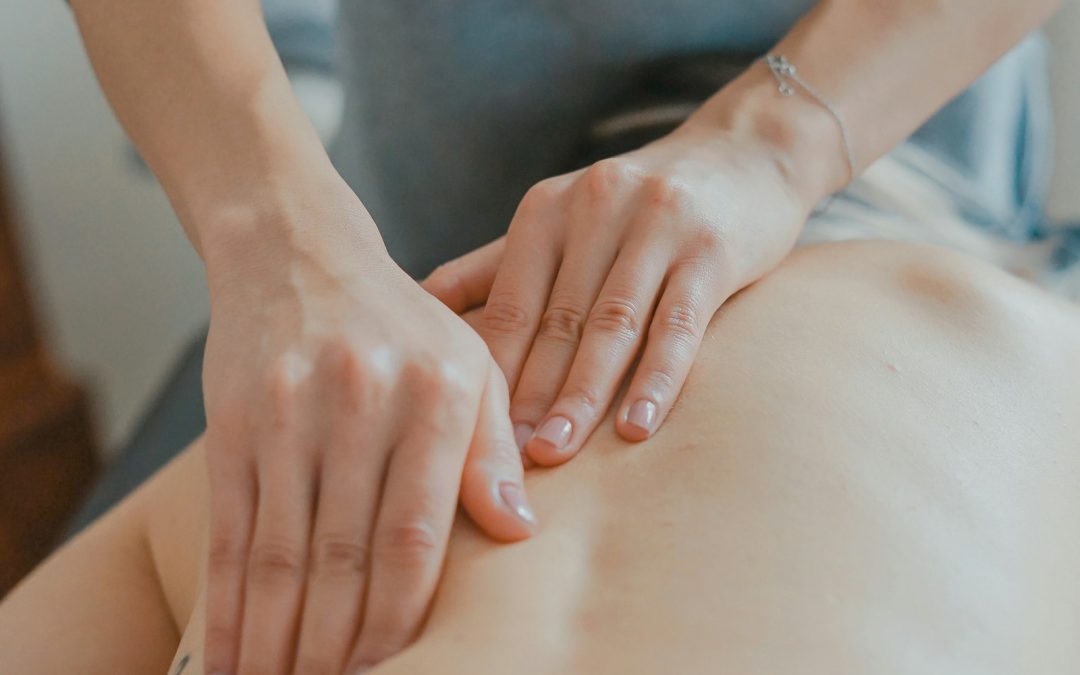
Sore after a hard workout or your first fall sports practice? Here’s what current research actually says about massage and muscle recovery.
If you’ve ever hobbled down a flight of stairs a day or two after a tough run, a return to the gym, or your kid’s first soccer practice of the season, you’ve met delayed-onset muscle soreness, better known as DOMS. It’s one of the most common reasons people ask about massage therapy, and it turns out there’s a decent body of evidence behind the advice. Here’s what’s actually known, what a recovery-focused massage session involves, and when soreness is a normal part of getting active again versus a sign to slow down.
What Is DOMS, and Why Does It Happen?
Delayed-onset muscle soreness typically shows up 12 to 24 hours after unfamiliar or unusually intense exercise, peaks around 24 to 72 hours, and then fades. It’s caused by microscopic damage to muscle fibers and the connective tissue around them, which triggers a short-term inflammatory response as the tissue repairs and adapts. It’s uncomfortable, but it’s a normal part of how muscles get stronger, and it isn’t the same thing as an injury.
DOMS tends to hit hardest with eccentric movements, the kind where a muscle lengthens under tension, like the downhill portion of a hike, the lowering phase of a squat, or a new sport that uses muscles you haven’t worked in a while. That’s part of why late summer and early fall, when kids head back to organized sports and adults return to routines after a looser summer schedule, tends to bring a wave of it.
Does Massage Actually Help Muscle Recovery?
The research here is more encouraging than for many other recovery tools. A meta-analysis pooling over a dozen studies found that massage meaningfully reduced reported muscle soreness in the days following intense exercise, compared to no treatment at all. Several trials have also found reductions in creatine kinase, a blood marker associated with muscle damage, in people who received massage after exertion, along with improvements in measures of muscle strength and function during recovery.
Massage appears to help through a few overlapping mechanisms: it increases blood flow to worked tissue, which may support the clearance of metabolic byproducts; it can reduce the perception of pain by affecting how the nervous system processes discomfort; and for many people, it simply supports relaxation and sleep, both of which matter for recovery. Comparative research looking at massage alongside other popular recovery methods, like cold water immersion, stretching, and vibration therapy, has generally found massage holds up well, particularly for easing soreness and stiffness.
It’s worth being honest about the limits of the evidence too. Effects vary depending on when massage is applied relative to exercise, the technique used, and the individual, and massage isn’t a substitute for the basics of recovery: hydration, protein intake, and sleep. But as a complementary tool, the evidence for easing DOMS is genuinely solid.
What a Recovery-Focused Massage Session Looks Like
A massage aimed at muscle recovery usually looks a little different from a purely relaxation-focused session. Your registered massage therapist will typically ask about the activity that led to the soreness, which muscle groups are affected, and how recent the exertion was, since timing changes the approach. Techniques often include broader effleurage strokes to encourage circulation, targeted work on tight or overworked muscle groups, and lighter pressure than you might expect if the tissue is still in the acute soreness window.
For anyone training regularly, whether that’s a return-to-sport athlete, a weekend warrior, or a teenager newly enrolled in a fall sports program, our sports injury massage therapy services are built specifically around this kind of recovery and prevention work, with treatment plans that adjust as training load changes through the season.
Massage Myths Worth Retiring
A few ideas about massage and soreness persist despite not holding up well. Deep, aggressive pressure isn’t necessarily more effective, and on very sore tissue it can actually be counterproductive. The idea that massage “flushes out lactic acid” is outdated; lactic acid clears from muscle within an hour or two of exercise, long before soreness sets in, so that’s not what’s happening. And massage right before intense exercise isn’t the same as massage after it. Pre-exercise massage may have a mild, temporary effect on strength output, while post-exercise massage is where most of the recovery benefit shows up.
When to Seek Care (or When to Just Rest)
Typical DOMS is uncomfortable but predictable: it’s symmetrical, tied to a specific activity, and improves steadily over three to five days. Pain that’s sharp, one-sided, tied to a specific movement or joint, accompanied by significant swelling or bruising, or that isn’t improving after five to seven days is worth having assessed, since that pattern can point to an actual injury rather than normal exercise-induced soreness. When in doubt, a quick conversation with your massage therapist or another member of your care team can help sort out which one you’re dealing with.
Soreness doesn’t have to be something you just wait out. If you’re heading back into a sport, training block, or activity level that’s new for your body this season, book a session with our team to build a recovery plan that keeps you moving instead of sidelined.