
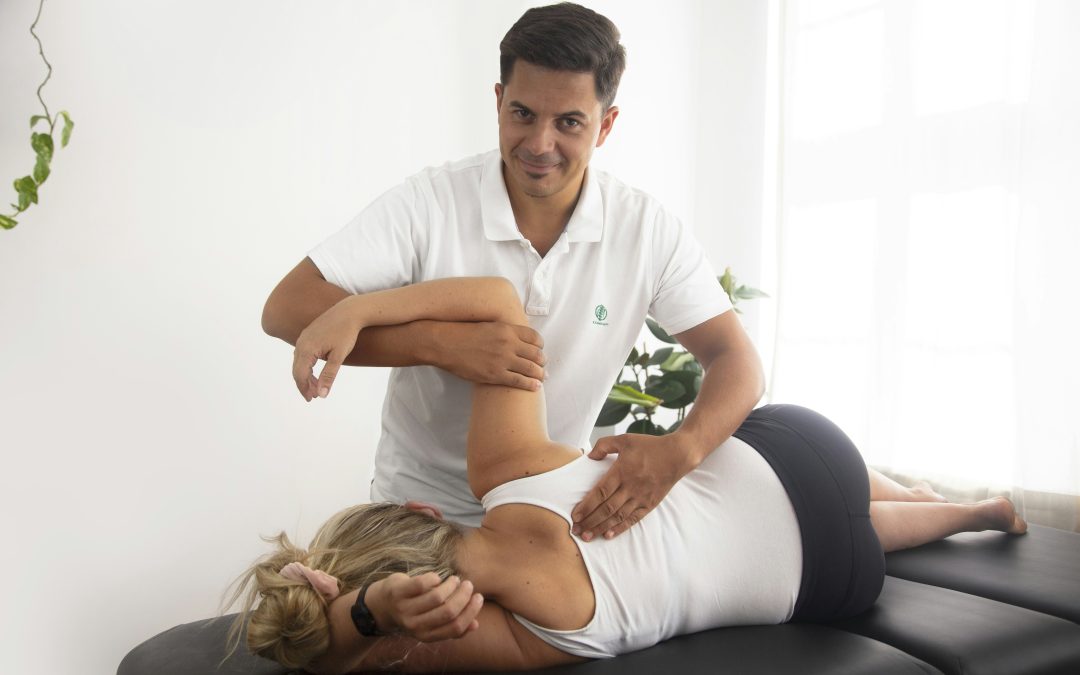
Tension headaches spike every fall as screens, stress, and shorter days set in. If you’ve noticed more tightness across your forehead, temples, or the base of your skull lately, you’re not imagining it, and massage therapy is one of the better-studied ways to find relief.
Why Tension Headaches Ramp Up This Time of Year
September and October bring a predictable pattern: longer hours at a desk, kids back in routines that ripple through the whole household, and a return to screens after a more relaxed summer. All of that adds up to more time spent with the head forward and the shoulders rounded, a posture that quietly loads the muscles at the base of the skull and across the upper back. Add in the general uptick in stress that comes with a new season of school and work schedules, and you have a near-perfect setup for tension-type headaches, which are the most common headache type by a wide margin.
Screen-related eye strain plays a role too. Staring at a monitor or phone for long stretches tends to reduce blink rate and encourage jaw clenching and neck bracing, both of which can refer pain up into the head. None of this means a headache is just stress or something to push through, it means the muscular piece of the puzzle is often very treatable.
What’s Actually Happening in a Tension Headache
Tension headaches are usually driven by sustained tightness in the muscles of the neck, jaw, scalp, and upper shoulders, particularly the suboccipitals at the base of the skull, the upper trapezius, and often the muscles around the temporomandibular joint (TMJ). These muscles can develop trigger points: small, irritable knots that refer pain to predictable areas of the head, temple, or behind the eyes, even though the muscle itself is some distance away. A cervicogenic headache, one that originates from the neck rather than the head itself, follows a similar pattern and is often mistaken for a regular headache.
This is different from a migraine, which involves a distinct neurological process, though the two can overlap and even trigger each other in people prone to both. If headaches are new, severe, changing in pattern, or come with other symptoms like vision changes or weakness, that’s a reason to check in with a physician first rather than assuming it’s tension-related.
How Massage Therapy Helps
Because so much of a tension headache lives in the muscles rather than the brain itself, hands-on work aimed at that muscular layer tends to have a real, measurable effect. Research on tension-type headaches has found that massage therapy focused on the neck and shoulders can reduce headache frequency and intensity, and studies on trigger point and manual therapy for cervicogenic headaches show similar benefit when the neck is the underlying driver.
A registered massage therapist typically works through a combination of techniques for headache and jaw-related pain: deep tissue work through the neck and upper shoulders to release the muscles that refer pain upward, trigger point therapy targeting the specific knots behind the referred pain, and gentle craniosacral-informed techniques for the scalp and base of the skull. When jaw clenching or TMJ tension is part of the picture, intraoral and extraoral jaw work is often added, since jaw tension and headaches frequently feed into each other. You can read more about how our team approaches headache, migraine, and TMJ care and what a typical treatment plan looks like.
The goal isn’t just short-term relief in the chair, it’s interrupting the cycle where muscular tension causes a headache, and the headache, plus the stress of dealing with it, creates more tension in return. Many clients notice a reduction in headache frequency within a few sessions, especially when massage is paired with attention to posture, screen breaks, and stress management day to day.
What to Expect From a Session
A first session for headache-related concerns usually starts with questions about when your headaches happen, what tends to trigger them, your posture and screen habits, and any jaw clenching or grinding. From there, your therapist will focus on the neck, shoulders, scalp, and sometimes the jaw, adjusting pressure to your comfort level throughout. It’s normal to feel some tenderness over active trigger points during treatment, followed by a looser, lighter feeling afterward. For headaches that have built up over months or years, a short series of sessions spaced a week or two apart tends to produce more lasting change than a single visit.
A Few Evidence-Based Ground Rules
Massage therapy is a supportive, non-invasive option for the muscular component of tension and cervicogenic headaches, but it isn’t a substitute for medical evaluation, particularly for migraines, headaches that are new or worsening, or any headache accompanied by red-flag symptoms. Many people find the best results when massage is used alongside good sleep, hydration, regular movement, and, where needed, guidance from a physician.
If fall’s return to desks and screens has brought your headaches back, you don’t have to just manage around them. Our registered massage therapists work with clients across the Kingston area on exactly this pattern of neck, jaw, and head tension, and can build a treatment plan around what’s actually driving yours.
Ready to get some relief? Book a free 15-minute consultation or your first appointment with our team and let’s talk about what’s behind your headaches.