
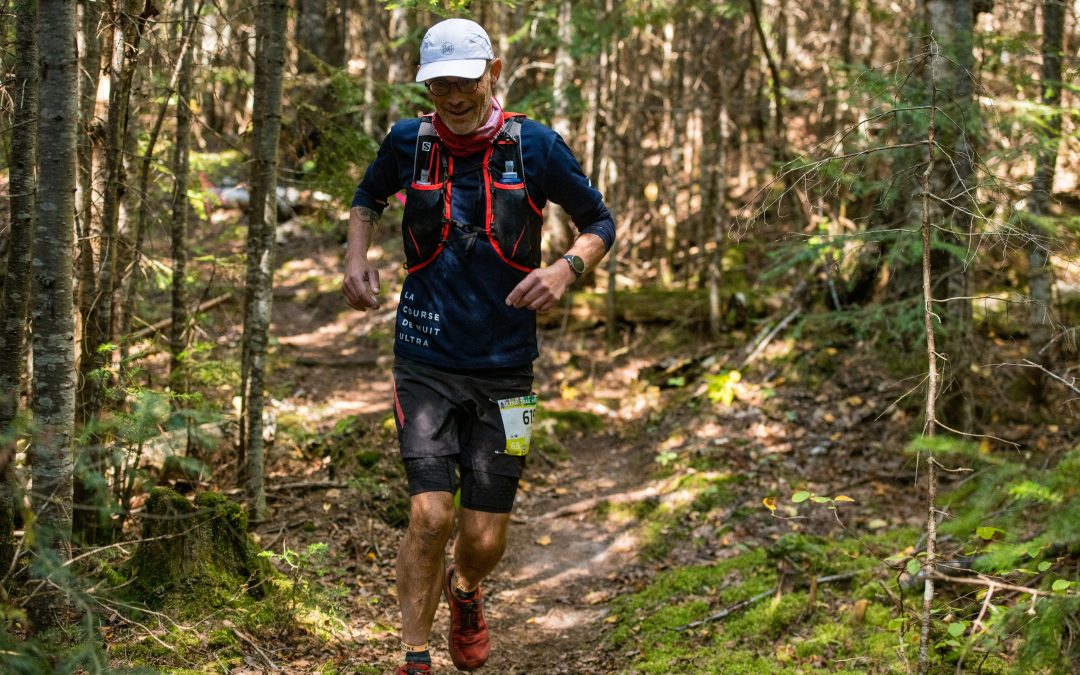
Fall race season is here, and run clubs are busier than ever. Here’s how manual osteopathy helps runners train through it without breaking down.
Why Fall Is Peak Season for Running Injuries
Cooler mornings, city run clubs, and a calendar full of fall races make September and October the busiest months of the year for runners. That surge in mileage is exactly why clinics see more running injuries this time of year than almost any other. Most of these injuries share a common root cause: training load increasing faster than the body can adapt. A long run added too soon, a jump in weekly distance, or simply logging more kilometres than your joints and connective tissue are used to can all tip the balance from productive training into overuse injury.
It isn’t only competitive runners who feel this. The rise of social running groups means more people than ever are lacing up for their first 10K or half marathon this fall, often without a long history of running-specific conditioning behind them. That makes injury prevention, not just injury treatment, worth paying attention to before race day arrives.
The Injuries We See Most Often
A handful of conditions account for the large majority of running-related complaints. Runner’s knee shows up as an ache around or behind the kneecap, often from the kneecap tracking slightly off-centre as the knee bends and straightens. Shin splints, or medial tibial stress syndrome, cause soreness along the inner shin and are linked to rapid increases in mileage, worn-out footwear, and how the foot strikes the ground. IT band syndrome brings sharp pain on the outside of the knee, usually tied to tightness through the hip and outer thigh. Plantar fasciitis causes stabbing heel pain that’s often worst with the first steps out of bed, and it settles with conservative care in the vast majority of cases.
None of these are exotic problems. They’re almost all overuse injuries, which means they respond well to addressing the underlying mechanics and training pattern rather than just resting and hoping they don’t come back.
How Manual Osteopathy Fits In
Manual osteopathy takes a whole-body view of running injuries rather than treating the sore spot in isolation. Because the hips, pelvis, knees, ankles, and feet all influence each other through the kinetic chain, pain at the knee can sometimes originate from restricted movement at the hip or foot, and vice versa. An osteopathic assessment looks at how you move as a whole, then uses hands-on techniques such as joint mobilization, soft-tissue work, and myofascial release to restore mobility and ease tension in the areas that are driving the problem.
This approach is a natural fit for our Sports Injuries Osteopathy service, which is built specifically around helping active people recover from and prevent exactly these kinds of overuse injuries. The goal isn’t only to calm down the pain you came in with, but to identify the movement pattern or restriction that let the injury develop in the first place, so it’s less likely to resurface once you’re back to full mileage.
What a Session Actually Involves
A first visit typically starts with a conversation about your training history, current mileage, footwear, and where the pain shows up during a run. From there, your osteopath will assess posture, joint mobility, and movement patterns through the legs, pelvis, and spine to find restrictions that may be contributing to the injury. Treatment itself is hands-on and gentle, focused on improving mobility and reducing tension rather than aggressive manipulation. Many people notice some improvement within the first one to three sessions, though full recovery timelines depend on the type and severity of the injury, and more complex or long-standing issues may need a longer course of care.
Evidence-Based Habits That Help Between Sessions
A few training habits consistently show up in the research on injury prevention. Building mileage gradually, rather than jumping up sharply week to week, remains one of the most reliable ways to avoid overuse injuries. Strength training two to three times a week has strong evidence behind it for reducing running injury risk, particularly work targeting the hips, glutes, and calves. Small changes in running form can matter too: increasing cadence slightly has been shown to meaningfully reduce the load going through the knee with each step. Rotating between two pairs of shoes and replacing worn-out pairs regularly also helps, since shock absorption breaks down well before shoes look obviously worn.
None of this replaces a proper assessment if you’re already dealing with pain, but paired with hands-on care, these habits give your body the best chance of adapting to a heavier training load without breaking down.
Ready to Run Through Fall Injury-Free?
Whether you’re training for a fall race, easing into a new run club, or nursing a nagging ache that hasn’t gone away on its own, an osteopathic assessment can help you understand what’s actually going on and build a plan to keep moving. Book a session with our team at Kurated to get ahead of fall’s running season before it gets ahead of you.