
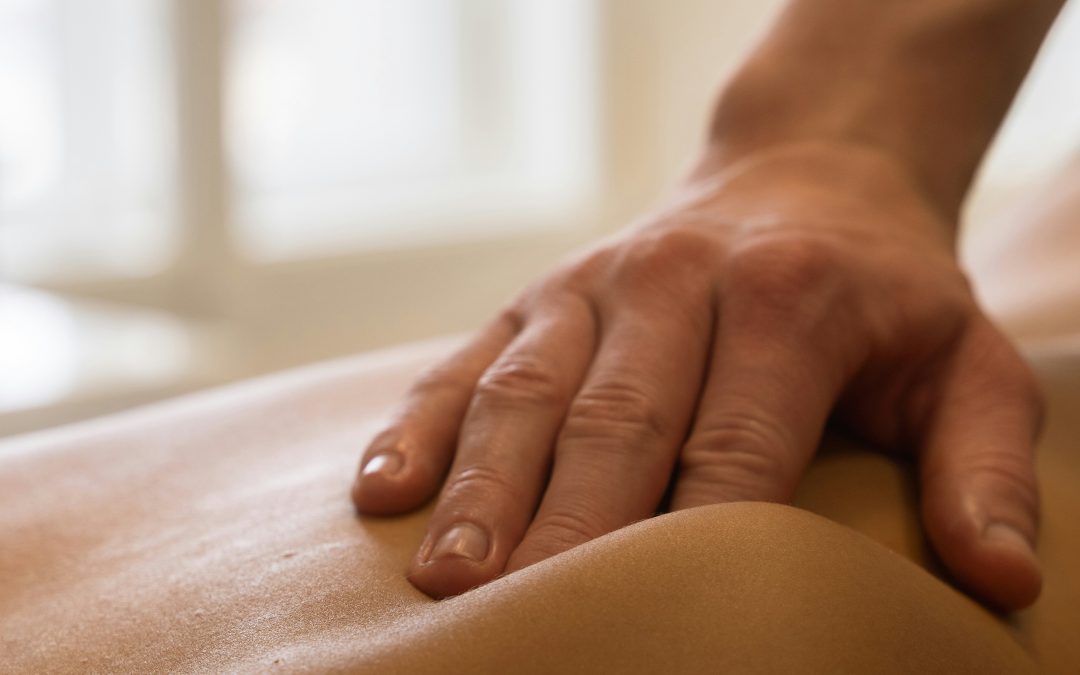
That deep ache two days after leg day is real — here’s what the research actually says about massage and muscle recovery.
Summer has most of us moving more: hiking, paddling, weekend tournaments, a return to the gym after a long winter lull. With that comes a familiar visitor — the deep, stiff soreness that shows up a day or two after a hard effort. It’s called delayed onset muscle soreness, or DOMS, and it’s one of the most common reasons people book a massage. But does massage actually speed up recovery, or is it just a nice way to feel better in the moment? Here’s what the evidence shows.
What’s Actually Happening When Muscles Are Sore
DOMS shows up 12 to 24 hours after unfamiliar or unusually intense exercise and typically peaks around the 48-hour mark. It’s caused by microscopic damage to muscle fibers and connective tissue, followed by a localized inflammatory response as the body repairs the tissue. That’s why the soreness feels worse the second day, not the first — the inflammation and repair process takes time to build.
DOMS is normal and, for most people, a sign that the muscle is adapting to a new demand. It’s different from a sharp, localized pain during activity, which is more likely to signal an actual injury and warrants a proper assessment rather than massage alone.
What the Research Says About Massage and Recovery
Massage therapy has been studied fairly extensively as a recovery tool, and a consistent picture has emerged. Systematic reviews and meta-analyses of exercise-induced muscle soreness have found that massage measurably reduces the sensation of soreness and muscle stiffness following intense exercise, and it appears to do this at least as well as, and in some comparisons better than, other common recovery methods like cold water immersion or compression.
The proposed mechanisms include increased blood and lymphatic flow to help clear the byproducts of muscle breakdown, a reduction in inflammatory markers, and a calming effect on the nervous system that lowers the perception of pain. Interestingly, the research is more mixed on whether massage restores muscle performance — strength and power output — as quickly as it reduces the feeling of soreness. In other words, massage seems to be genuinely effective for helping muscles feel better, even if it isn’t a shortcut back to peak output. Given that pain and stiffness are often what keep people from wanting to move again, that’s still a meaningful benefit — both physically and in terms of motivation to stay active.
What to Expect in a Session
A sports-focused massage session usually starts with a short conversation about what you’ve been training for, which muscle groups are affected, and whether anything feels like an injury rather than routine soreness. From there, your registered massage therapist will typically use a combination of techniques — broader strokes to warm up the tissue and improve circulation, followed by more targeted, deeper pressure through areas of tension. Pressure should feel firm and effective, not sharp or bruising; always tell your therapist if something feels like too much.
Timing matters, too. Massage in the day or two after an intense effort — once the initial acute inflammation has settled slightly — tends to be more comfortable and just as effective as massage immediately post-exercise. If you’re training regularly, many people find that working massage into their routine every couple of weeks, rather than only reaching for it after a rough weekend, helps manage cumulative tension before it builds into a bigger problem. Our registered massage therapists can help you figure out what cadence makes sense for your activity level.
Massage Alongside Other Recovery Tools
Massage doesn’t have to be the only tool in the kit. Sleep, hydration, and adequate protein intake all play a foundational role in how quickly muscle tissue repairs itself, and gentle movement the day after a hard session (a walk, an easy swim, light stretching) can be just as valuable as passive recovery methods. Massage tends to work well as one part of a broader recovery approach rather than a single fix — particularly for people managing a recurring sports injury or chronic pattern of overuse, where a more structured treatment plan makes sense. If soreness in a specific area keeps coming back after activity, it’s worth having it properly assessed rather than just working around it. Our sports injury massage therapy services are designed exactly for that — combining hands-on treatment with practical guidance on training load, so recurring tightness or strain gets addressed at the source instead of just managed after the fact.
When to Book a Session
If you’re staying active this summer and want a recovery tool that’s backed by evidence rather than just a good excuse to relax (though that’s a nice bonus too), sports massage is a reasonable, low-risk option to add to your routine — particularly if soreness or tightness is starting to get in the way of the activities you actually want to be doing. As always, if you’re dealing with sharp pain, swelling, or something that doesn’t feel like ordinary muscle soreness, it’s worth getting it looked at before booking a massage rather than after.
Ready to give your muscles a hand? You can book a session with our team directly online, including a free 15-minute consult if you’re not sure where to start.