
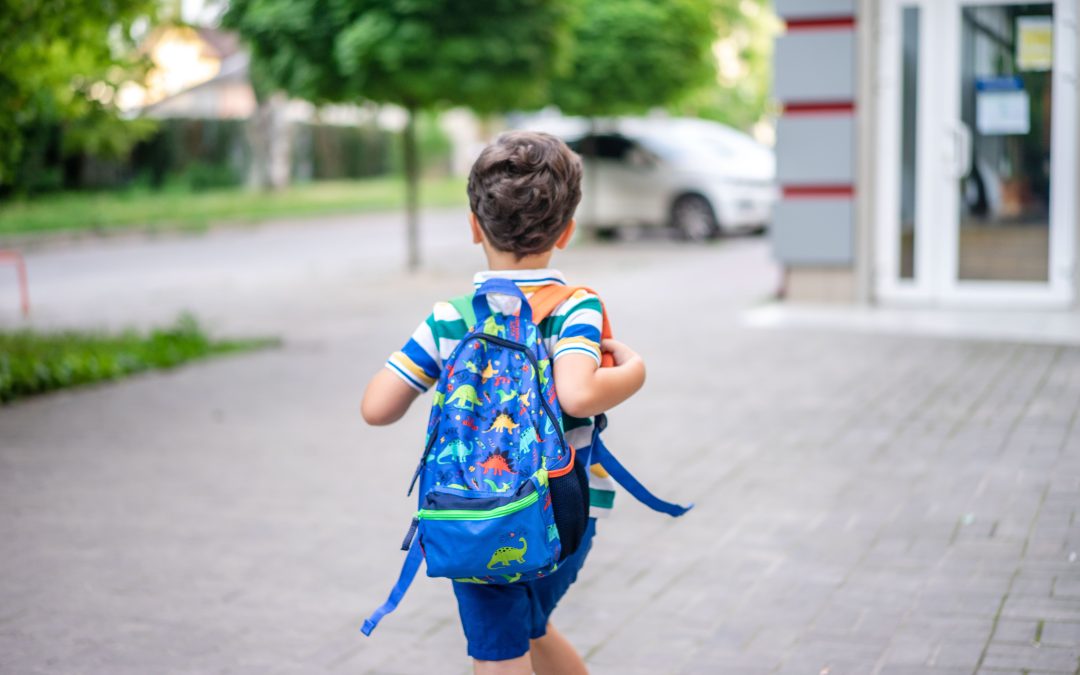
School is back in session, and so are the overstuffed backpacks. Here’s what parents should actually know about backpack weight and their child’s posture.
Why a Backpack Can Be Harder on Kids Than It Looks
A child’s spine is still developing, which means it responds differently to sustained load than an adult’s does. When a backpack is too heavy or worn incorrectly, kids naturally compensate by leaning forward, rounding their shoulders, or shifting weight to one side. Researchers studying school-age children have found that heavier loads are associated with measurable changes in posture, including a forward-leaning head position and altered curvature through the lower back. None of this means a backpack is dangerous on its own — but repeated, poorly distributed strain during years of rapid growth is worth paying attention to.
The good news is that most backpack-related posture issues are preventable with a few practical adjustments, and they’re rarely a sign of anything serious. Think of it less as an emergency and more as an easy habit to get right early in the school year.
How Much Weight Is Too Much?
A widely cited guideline from pediatric orthopedic sources suggests a loaded backpack should stay under roughly 10 to 15 percent of a child’s body weight. For a 40-pound kindergartener, that’s well under 6 pounds — easy to exceed once you add a lunch box, water bottle, and a couple of textbooks. Older kids carrying binders, laptops, and sports gear are often the ones who creep furthest past the recommended range without anyone noticing, simply because their bags are bigger.
A quick way to check: have your child put the backpack on and stand normally. If they lean forward to compensate for the weight, arch their back, or struggle to stand up straight without adjusting, it’s likely carrying more than it should.
Packing and Wearing It the Right Way
Weight is only part of the picture — how a backpack is packed and worn matters just as much.
A few habits make a real difference: use both shoulder straps rather than slinging the bag over one shoulder, which shifts the load unevenly and encourages a sideways lean. Position heavier items closest to the back rather than at the bottom or front of the bag, and adjust the straps so the backpack sits snugly against the mid-back, not down near the hips. If the school allows it, a rolling backpack can be a reasonable alternative for kids who consistently carry heavy loads, such as those with multiple textbooks or musical instruments.
It’s also worth doing a periodic backpack audit together. Kids tend to accumulate extra notebooks, forgotten permission slips, and unnecessary items over the term, and a five-minute clean-out every few weeks keeps the load from creeping upward without anyone noticing.
Signs Worth a Closer Look
Most kids adapt just fine to a well-packed, properly worn backpack. But certain signs suggest it’s worth checking in with a professional rather than waiting it out: ongoing complaints of back, neck, or shoulder discomfort after school; visibly uneven shoulders or a head that consistently tilts to one side; new slouching that doesn’t improve when you remind them to stand tall; or reluctance to participate in gym class or sports that wasn’t there before. Any of these lasting more than a couple of weeks is a reasonable reason to have things assessed, rather than assuming it will resolve on its own.
This is where manual osteopathy can be a helpful piece of the picture. Rather than focusing narrowly on the sore spot, an osteopathic assessment looks at how a child is holding and moving their whole body, including patterns that may have developed from months of carrying a bag a certain way. Treatment uses gentle, hands-on techniques appropriate for a growing frame, with the goal of easing restriction and supporting more balanced movement, not forcing a correction in a single visit. It’s worth noting that research on manual therapy specifically for pediatric posture is still developing; it’s a reasonable option to explore alongside good backpack habits, not a guaranteed fix or a substitute for a doctor’s evaluation when something seems seriously off.
Making It a Habit, Not a One-Time Fix
The start of the school year is the easiest time to reset backpack habits, because routines are already being rebuilt from scratch. A quick weigh-in, a look at how the straps are adjusted, and a standing reminder to clean out the bag every couple of weeks can prevent most of the strain before it starts. If your child is already dealing with recurring discomfort, it doesn’t have to just be part of the school routine.
If you’re noticing your child slouching, complaining of tightness, or favoring one side after a full day at school, our team would be glad to take a look. Book a free 15-minute consultation to talk through what you’re seeing and whether an osteopathic assessment makes sense for your family this year.